

Understanding Dewald
Reinardt Brevis is one of the puzzle pieces to understanding Dewald

This article is brought to you by Beyond a Boundary’s generous patrons and gracious coffee buyers.
There was a bit if a tug-of-war. Yolanda Brevis on one end, Dewald and Reinardt on the other. Early into the summer, Yolanda would sprinkle soil on her lawn to help it thrive. As soon as it became green and lush, Dewald and Reinardt would cover a 5-metre strip with plastic, to kill the grass.
The strip was the batter’s end. Behind the stumps, they put a table that acted as the wicketkeeper. If you knicked the ball and it touched the table, you were caught out by the keeper. The flowers and little bushes were fielders. A couple of times the windows were co-opted into fielding. That drove Yolanda to ban the use of hard balls on this pitch.
Yolanda Brevis was not amused. Her boys seemed not to understand how their enterprise made the backyard look with that five-metre patch of dead grass. The bald patch was unsightly. Her bemusement lost the battle to the boys’ excitement for cricket.
Every summer the boys diligently worked on their little pitch. Their mother got over it quickly anyway, there was no reason to stop. They hardened the pitch by rolling a weighted drum over it.
“We made it nice and hard like a pitch. We would also ask the gardening service people that they cut the grass extra, extra short so that it can almost be like a pitch. Our mother was never happy about us killing her grass,” Reinardt told me.
This is the story that started my journey with Dewald Brevis. It’s been four or five years since I learned that story and shared it. It always reminds me that one of the things that help in understanding Dewald is appreciating Reinardt’s role in his journey.
A few years ago, I was doing a piece on Simon Harmer. I had a virtual sit down with the spinner. He was in New Zealand, and I was in Johannesburg. I had all the time in the world, but he only had an hour. He had training, team meetings, and other commitments. I had an article on him to write. Just before we wrapped up the chat, he sent me his brother’s number.
Matt Harmer, or Dr Matthew Harmer, was an invaluable resource. He shared a treasure trove of memories that helped me to understand Simon Harmer much better than I would have done if I only had my interview with the spinner.
As an older brother, Matt helped to sharpen Simon’s competitive edge because he gave the spinner a target to chase. Matt was his first and constant opponent. Simon observed, imitated and then sought to outplay Matt. That’s how he got into cricket, and that’s also how he got into tennis. The older Harmer played both sports.
Simon’s drive to outdo Matt is not an isolated case. According to a study, Sibling Dynamics and Sport Expertise, younger siblings show a ‘greater commitment’ because they want to be better than their older siblings. Tim Wigmore and Mark Williams drew the same conclusions in their book, The Best: How Elite Athletes Are Made.
One of my favourite stories about Dewald is not from cricket. He was a keen rugby player from an early age. When he was nine, Dewald made his mind up that he wanted to play at number nine or 10 and put his name up for both positions at his school. His coach felt he had better options at both scrum half and fly half. But, Dewald was determined.
He worked his ass off to improve in both positions. However, the results weren’t immediate. It took him a couple of years to get to where he wanted. Dewald’s improvements were so vast that he played scrum half for the Blue Bulls’ u12 and u13 years. He was also the place kicker in his u13 Blue Bulls year.
In their book, Option B, Adam Grant and Sheryl Sandberg highlight that resilience is not a trait one is born with, but rather, a muscle that one has to develop and strengthen. Dewald’s early years of playing up against Reinardt and against Reinardt and his friends helped to develop that muscle early.
Another benefit of playing up is that older siblings force the development of more advanced skills at a younger age in order to keep up with their older teammates, as Wigmore and Williams wrote.
Off the field, Matt and Simon were best friends. Similarly, while Dewald was determined to outplay Reinardt on their backyard strip, off it, they were best mates. It was all for one and one for all. They did everything they could to make each other better. The brothers shared a dream of taking over the cricket world together one day.
Reinardt with his pace bowling and Dewald with his batting. They watched countless hours of of recorded footage and live games before going to their backyard strip to re-enact what they have watched. Reinardt ‘discovered’ a wonderful club with great people and a great environment.
He talked Dewald into joining him there. It was one of the best decisions the brothers made. Laudium Cricket Club provided a solid base for the boys to hone their skills. Unfortunately, Reinardt suffered a back injury that all but ended his fledgling career.
However, that didn’t end his love for the game or his devotion to his brother’s cricket. Reinardt went off to university, studied for his LLB Law Degree and is now doing with his articles. He attends as many of Dewald’s matches as his schedule allows him.
When they were younger, Dewald listened to Reinardt’s feedback on games and insights, he still does now. Reinardt is one of the few people whom Dewald knows has his back. He is one of Dewald’s safe habours. Like Matt Harmer, he is protective of his sibling.
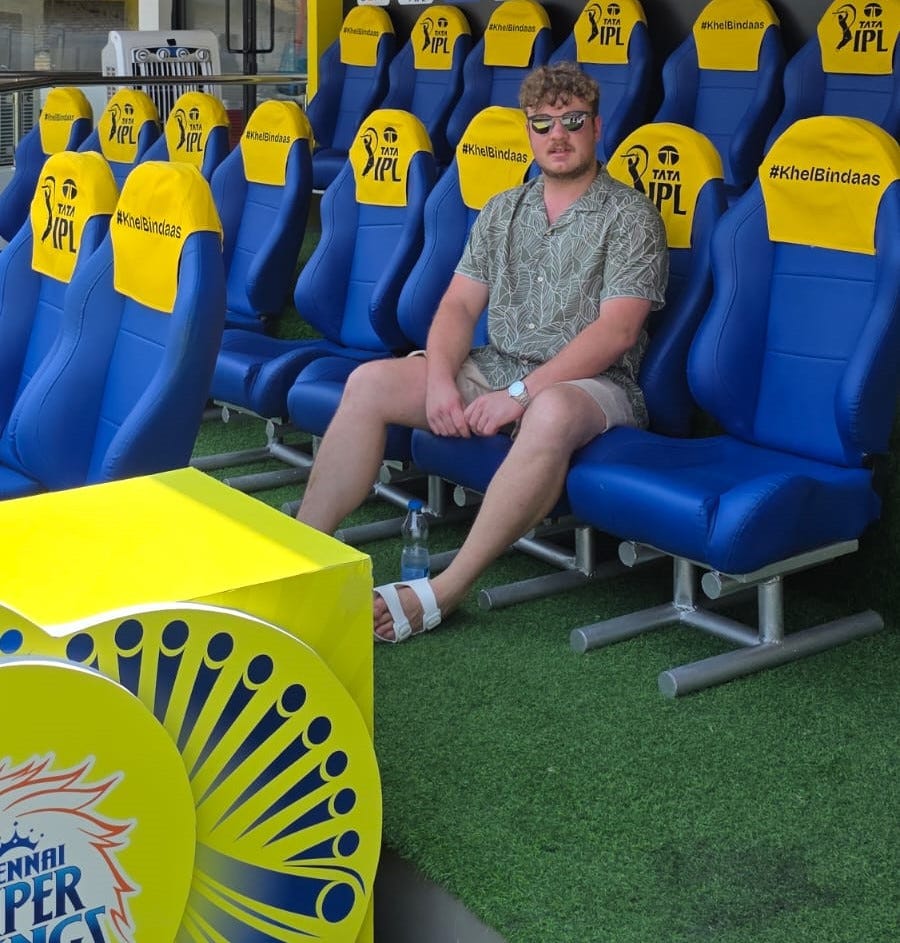
I was thinking of all this while watching the Chennai Super Kings’ project on Dewald’s journey. Watch it when you get a moment.
Beyond a Boundary is a reader-supported publication. It is powered by our Patrons and the generous coffee buyers. It’s been a little cold and the coffees will go a long way in keeping my fingers thawed.
Thank you to everyone for your time and for your support of Beyond a Boundary over these five years! And thank you for helping spread the word about this corner of the cricket space to all your family, friends, and social networks! Word of mouth is a huge, huge part of what can help Beyond a Boundary to keep growing and going along.